
Winter Warming Teas: Spice, Caramel & Chestnut
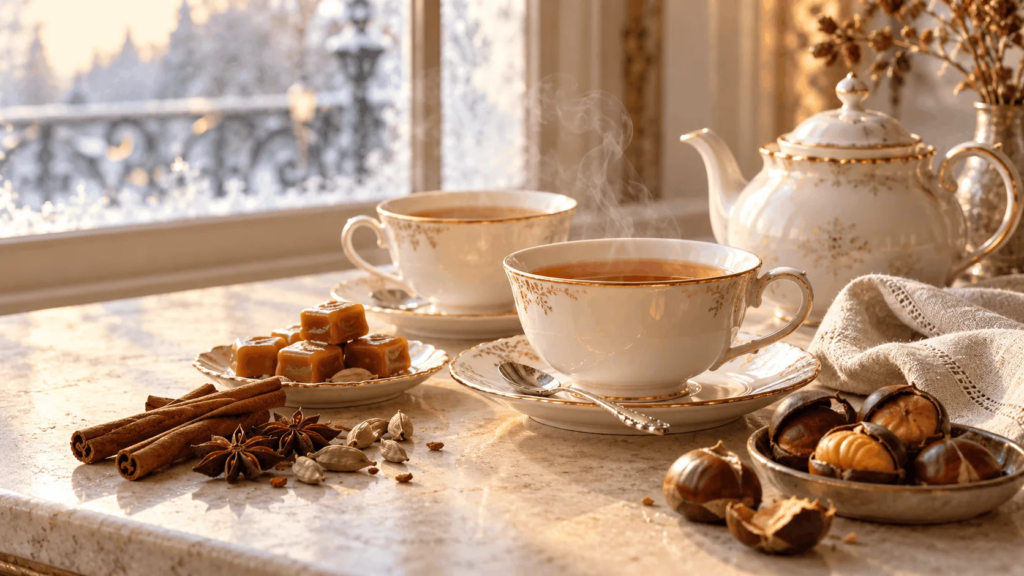
It is four o’clock and the light is already turning amber. A cup steams beside a small plate holding a madeleine or a square of shortbread. On afternoons like this, tea is less about refreshment and more about comfort: something to hold in both hands and linger over.
Three flavours suit these moments especially well. Spice brings lift and fragrance. Caramel brings roundness and a dessert-like softness. Chestnut is quieter: mellow, roasted and gently nutty. This guide explains how each one tastes, which JANAT teas belong to each family, and how to brew and pair them so your winter cup feels considered rather than routine.
What makes a tea feel warming?
Much of it comes down to heat and aroma. A hot cup warms your hands, and the steam carries scent before the first sip. Fragrant ingredients such as cinnamon or ginger also create a gentle tingle that the palate reads as warmth.
Body matters too. A full black tea, especially with milk, feels rounder and more substantial than a light green tea. Flavours we link with baking, such as spice, caramel and roasted nuts, add to that sense of comfort.
In this guide, “warming” describes how a tea feels to drink. It is not a claim about health, immunity or circulation.
Spiced teas: aromatic and lively
Each spice shapes a cup differently. Cinnamon adds a sweet aroma without any sugar. Ginger brings a gentle bite at the back of the throat. Cardamom is floral and slightly citrusy, while cloves are deep and resinous, so a little goes a long way.
Spiced black tea vs masala chai
A spiced black tea is brewed like any other black tea. The leaves and spices steep in hot water, and you add milk afterwards if you like. Traditional Indian masala chai is a different drink: tea and spices are simmered together in milk, usually with sugar, which gives a thicker, sweeter cup.
Spiced teas from JANAT
- Everest Chai (Black Series): JANAT describes it as a chai blended with Nepal tea and spice. It comes as a 125g tin or a box of 25 tea bags.
- Christmas Blend 2026, Marche de Noël (Seasonal Series): Ceylon black tea with warming spices, orange peel, caramel and ginger. JANAT likens its character to gingerbread.
- Golden Moon Chai (Journey Series): a chai made with ingredients from the Kingdom of Bhutan.
These descriptions don’t name every spice, so check the tin or label if you need the full ingredient list.
When to enjoy it: a late-morning cup, the first drink after a cold walk, or alongside fruit cake, apple tart or ginger biscuits.
Caramel teas: rounded, buttery and dessert-like
Caramel teas use flavouring to suggest cooked sugar, butter and toffee. On a black tea base, that aroma softens the tea’s natural briskness. Add a splash of milk and the cup moves closer to a café crème than a plain black tea.
A tea can smell sweet without being sweetened. Some caramel teas contain no sugar at all, while others include sugar or caramel pieces. The aroma alone won’t tell you which, so check the ingredient list and nutritional information on the pack.
Caramel teas from JANAT
- Caramel (Provence Series): described by JANAT as its most gourmand caramel tea, in a box of 25 tea bags.
- French Oak Caramel Tea (French Oak Series): JANAT describes “a slightly sweet, mellow and light bitter caramel scent”. The French Oak range is aged in oak barrels, which JANAT says brings notes of oak wood and vanilla.
- Tahani Luna (Journey Series): a blend of caramel and sweet cacao from South America.
- Christmas Blend 2025, Noël d’Amour (Seasonal Series): Ceylon tea with sweet apple and notes of salted caramel, inspired by Mont Saint-Michel.
Pairings: tarte Tatin, crêpes, palmiers or plain butter biscuits. Very sugary desserts tend to compete with the tea, so keep the pastry simple.
Chestnut teas: mellow, roasted and gently nutty
Chestnut is the softest of the three. Think of roasted chestnuts from a winter market stall, or the rich sweetness of marron glacé. The flavour is earthy and slightly sweet, with almost no sharp edges.
Chestnut-flavoured tea vs chestnut infusion
Most chestnut teas are black teas with added chestnut flavouring, and some also contain pieces of roasted chestnut. An infusion made mainly from chestnut or other non-tea ingredients is a different drink, and its caffeine depends on what else is in the blend. The name on the tin won’t always tell you which kind you have.
JANAT’s chestnut tea
Cimarron d’Or (Seasonal Series) is JANAT’s first chestnut-flavoured tea. It is based on the traditional French marron glacé recipe, and JANAT describes it as combining the deep umami and rich, sweet fragrance of Satoikuri chestnuts. The description does not name the tea base or say whether chestnut pieces are included, so check the label for the full ingredients.
If you have a nut allergy, read the ingredient and allergen information before you brew. A chestnut-themed tea may contain chestnut or other nuts.
Pairings: madeleines, plain shortbread, a Mont-Blanc pastry or a simple chestnut cake. Keep the pastry plain so the chestnut stays in focus.
Which winter tea suits your taste?
| Flavour style | Typical character | Best for readers who enjoy | Milk pairing | Suggested food pairing |
|---|---|---|---|---|
| Spice | Aromatic, lively, gently tingling | Gingerbread, chai, mulled flavours | Good; add milk after steeping | Fruit cake, apple tart, ginger biscuits |
| Caramel | Rounded, buttery, dessert-like | Toffee, crème caramel, sweet aromas | Very good; creamy and café-like | Tarte Tatin, crêpes, palmiers |
| Chestnut | Mellow, roasted, gently nutty | Marron glacé, roasted nuts, quiet flavours | Taste plain first, then a small splash | Madeleines, shortbread, chestnut cake |
How to brew a satisfying winter cup
Always start with the instructions on your JANAT pack, because they are written for that specific blend. If you don’t have them to hand, these general ranges for flavoured black teas are a sensible starting point:
| Step | Loose leaf | Tea bag |
|---|---|---|
| Quantity | 2–3 g (about 1 level teaspoon) per 200 ml | 1 bag per 200 ml |
| Water | Freshly boiled, around 95–100°C | Freshly boiled, around 95–100°C |
| Steeping time | 3–4 minutes | 3–4 minutes |
| With milk | Add after steeping | Add after steeping |
Strengthen the flavour without bitterness
- Use more leaf, not more time. An extra half-teaspoon gives a bolder cup. Leaving the tea for seven minutes mostly adds bitterness.
- Warm the pot or cup first with a little hot water, so the brew doesn’t cool too quickly.
- Use freshly drawn water and boil it once. Reboiled water can taste flat.
- Remove the leaves or bag when the time is up, so the last sip tastes like the first.
Adding milk
If you take milk, brew slightly stronger so the flavour holds. Add milk after steeping, a little at a time, and taste as you go. Whole milk gives the creamiest result, and oat milk suits caramel and chestnut flavours well.
Three simple winter serving ideas
1. Spiced orange cup
You’ll need:
- 2–3 g spiced black tea, such as Everest Chai, or 1 tea bag
- 250 ml freshly boiled water
- Optional: 1 strip of orange peel (no white pith) and 1 small cinnamon stick
- Optional: 1 teaspoon honey
Steps:
- Put the tea in a warmed pot or mug, with the orange peel and cinnamon if using.
- Pour over the water and steep for 3–4 minutes.
- Strain, then sweeten with honey only if you want to.
If your blend already includes orange peel or spice, as the Christmas Blend 2026 does, skip the optional extras and let the blend speak for itself.
2. Caramel milk tea
You’ll need:
- 3 g caramel tea, or 2 tea bags
- 150 ml freshly boiled water
- 100 ml whole or oat milk
- Optional: 1 teaspoon light brown sugar or a small pinch of flaky sea salt
Steps:
- Steep the tea in the water for 4 minutes. The extra leaf keeps the flavour strong once the milk goes in.
- Meanwhile, warm the milk gently in a small pan without letting it boil. Whisk it briefly for a light foam.
- Strain the tea into a large cup and pour the milk over it.
- Taste before adding sugar or salt. The caramel aroma is often enough on its own.
3. Chestnut tea and madeleines
You’ll need:
- 2–3 g Cimarron d’Or or another chestnut-flavoured tea per 200 ml cup
- 2 madeleines, or a slice of plain sponge or chestnut cake
- Optional: 1 teaspoon crème de marrons (sweetened chestnut spread) with a spoonful of crème fraîche
Steps:
- Brew the tea following the pack instructions.
- Taste it plain first, then take a bite of madeleine and sip again to notice how the flavours meet.
- Try a splash of milk with the second cup, not the first.
Create a French-inspired winter tea ritual
In France, the late-afternoon pause known as le goûter is a small, unhurried moment: something sweet, something warm, and a little time set aside. It translates easily into a winter tea habit.
- Pick a set time. Around four o’clock works well, after lunch has settled and before the evening begins.
- Keep it to one tea and one pastry. A single good pairing feels more deliberate than a crowded table.
- Use a teapot and proper cups. Warm them first, and the ritual already feels different from a mug at your desk.
- Step away from screens for fifteen minutes and pay attention to the aroma before the first sip.
Sharing tea with guests
- Offer a small tasting flight. Brew one spiced, one caramel and one chestnut tea the same way, then pour small cups so guests can compare.
- Put milk, honey and lemon on the side, so everyone can adjust their own cup.
- Label each pot with a card naming the tea and suggesting a pairing.
- Keep the pot warm with a tea cosy, and remove the leaves once steeping is done so the second cup isn’t bitter.
For more pairing ideas, see our tea and food pairing guide.
Find your winter cup with JANAT
Since 1872, JANAT has blended teas for moments of pause and sharing. Explore the Seasonal Series for chestnut and festive blends, the Black Series for Everest Chai, or the French Oak Series for caramel with a touch of oak.
Seasonal teas can be limited, so contact the JANAT team to ask about current availability. If you’re not sure where to start, our Find Your Tea page can help.
Frequently asked questions
What are the best tea flavours for winter?
Spice, caramel and chestnut are three of the most comforting. Spice is aromatic and lively, caramel is rounded and dessert-like, and chestnut is mellow and gently nutty. Choose based on the flavours you already enjoy in food.
Can caramel tea taste sweet without added sugar?
Yes. Caramel flavouring can create a sweet aroma and impression without adding sugar. Some caramel teas do contain sugar or caramel pieces, though, so check the ingredient list and nutritional information on the pack.
What does chestnut tea taste like?
Chestnut tea usually tastes mellow, softly sweet and lightly roasted, with an earthy depth reminiscent of roasted chestnuts or marron glacé. The character depends on the base tea and whether real chestnut pieces are included.
Can you add milk to spiced or flavoured black tea?
Yes, most spiced, caramel and chestnut black teas take milk well. Brew a little stronger, add milk after steeping, and taste the tea plain first so you know what the blend is like on its own. See should you add milk to tea?
Do winter teas contain caffeine?
It depends on the base. Blends made with black tea contain caffeine, whatever their flavour. Infusions made only from herbs, spices or other non-tea ingredients are usually caffeine-free, so check the ingredient list. Our guide to decaf and low-caffeine teas explains more.
Find your next cup.
Need help choosing your tea? Tell us what you enjoy, and our team will help you find your next cup.