
French Apple Tea: Pomme d’Amour, Normandie Pomme & Provence Apple
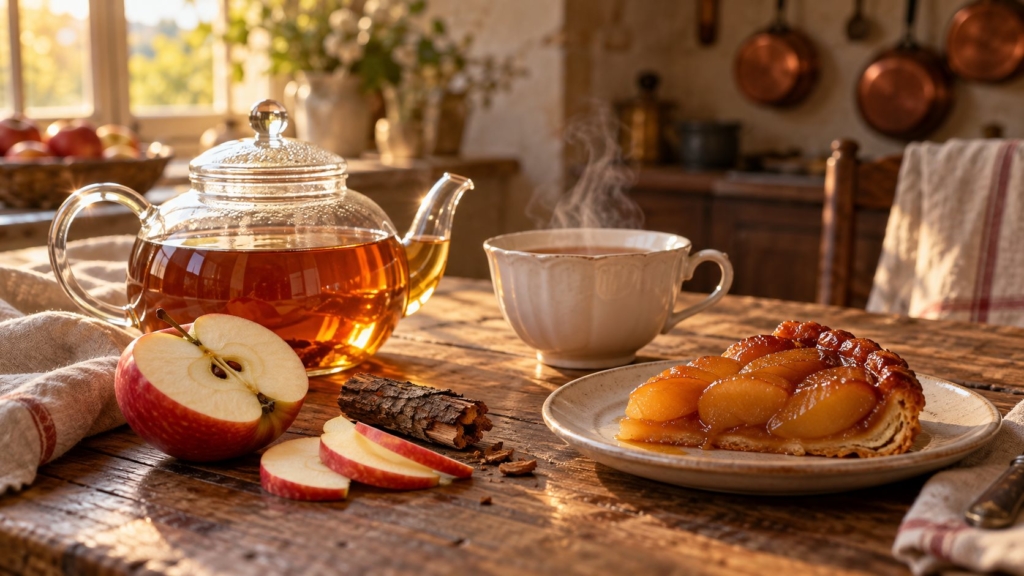
Pour hot water over an apple tea and the first thing you notice is the scent: baked fruit, a little sweetness, something that smells like autumn. Yet two teas with “apple” in the name can drink very differently, depending on the leaf underneath and how the apple is added.
JANAT offers three apple teas: Pomme d’Amour, Normandie Pomme and the Apple tea in its Provence Series. This guide sets out what JANAT says about each one, where they differ, and how to brew and serve them, so you can decide which suits your taste.
What is French apple tea?
“Apple tea” covers two quite different drinks:
- Apple-flavoured tea: real tea leaves (black, green or another type) with apple flavouring or apple pieces added. It contains caffeine, because the base is tea.
- Apple fruit or herbal infusion: dried apple and other fruits or herbs, with no tea leaves. These are usually caffeine-free.
The name on the pack doesn’t always tell you which you’re holding, so check the ingredients.
“French” can also mean different things. It may describe a brand’s heritage or a style of blending, rather than where the leaves or apples were grown. JANAT is a French tea house founded in 1872, and on its About page it notes that the fruit essences used in its teas include French apple from Normandy. Where a specific tea’s apples come from, though, is best taken from that product’s own description.
Pomme d’Amour: what to expect
Collection: Journey Series
Pomme d’Amour is the most elaborate of the three in how it’s made. JANAT describes it as made with charcoal-cooked Pink Lady apples, flavoured with handpicked Ceylon tea, and blended for three days with apple essence in an oak barrel. JANAT calls it “the quintessence of gourmet”.
That description points to a richer, cooked-apple character than a fresh, crisp apple. Think baked apple rather than apple straight from the tree. The oak-barrel blending step links it to JANAT’s French Oak teas, which the brand describes as carrying notes of oak wood and vanilla. JANAT doesn’t list vanilla, caramel or spices for Pomme d’Amour itself, so don’t expect them.
The name means “love apple” in French, which is also the French name for a toffee apple. That’s a hint at the mood of the tea, not a list of ingredients.
Tea base: Ceylon tea (JANAT doesn’t state whether it’s black or another type). Format: not stated on the series page.
Normandie Pomme: what to expect
Collection: Gold Series, 100 g tin
Normandie Pomme is the most direct of the three. JANAT describes it as Ceylon tea flavoured with authentic apples from the gardens of Normandy, giving “a sweet and rich explosion of apple tastes”.
Normandy is famous for its orchards, cider and Calvados, and the name nods to that tradition. The apple origin here comes from JANAT’s own description, not from the name alone.
Where Pomme d’Amour leans on process (charcoal-cooking and oak), Normandie Pomme leans on the fruit itself. Expect a fuller, sweeter apple flavour sitting on a Ceylon base, in a loose-leaf tin.
Tea base: Ceylon tea (type not stated). Format: 100 g tin.
Provence Apple: what to expect
Collection: Provence Series, box of 25 tea bags
On JANAT’s site, this tea is simply called Apple. It sits in the Provence Series, which JANAT describes as a selection of fruity flavours from the south of France. We call it “Provence Apple” here to tell it apart from the other two.
JANAT describes it as “a delicious apple tea with mellow and rich flavours and a slight touch of sourness”. That gentle tartness is the clearest difference from Normandie Pomme’s sweeter, fuller profile. It is also the only one of the three sold in tea bags, which makes it the easiest to brew at work or while travelling.
JANAT’s description doesn’t name the base, and the Provence Four Flavour Assortment that includes apple refers to its contents as “fruit infusions”. Check the pack to see whether this tea contains tea leaves before assuming it has caffeine, or that it’s caffeine-free.
Tea base: not specified by the brand. Format: 25 tea bags; apple also appears in the 40-bag Four Flavour Assortment.
Compare the three at a glance
| Tea | Verified tea base | Official flavour notes | Suggested serving style* | Best suited to* |
|---|---|---|---|---|
| Pomme d’Amour (Journey Series) | Ceylon tea | Charcoal-cooked Pink Lady apples, apple essence, blended three days in an oak barrel | Plain first, as an afternoon or dessert tea | People who like baked-apple, gourmand flavours and the idea of oak ageing |
| Normandie Pomme (Gold Series, 100 g tin) | Ceylon tea | Apples from the gardens of Normandy; sweet and rich | Plain or with a splash of milk | Fans of a clear, full apple flavour in a loose-leaf tea |
| Provence Apple (Provence Series, 25 bags) | Not specified by the brand | Mellow and rich, with a slight touch of sourness | Plain, hot or iced | People who prefer a lighter, slightly tart apple and the convenience of tea bags |
*Serving style and “best suited to” are editorial suggestions, not JANAT recommendations.
Which apple tea should you choose?
These suggestions are based only on how JANAT describes each tea.
- You want a dessert-like cup: Pomme d’Amour. Cooked apples and oak-barrel blending suggest the deepest, most gourmand of the three.
- You want apple to lead clearly: Normandie Pomme. Its description centres on a sweet, rich apple flavour.
- You prefer something lighter with a little tartness: Provence Apple, described as mellow with a slight sourness.
- You want convenience: Provence Apple, as the only one in tea bags. Normandie Pomme comes as loose leaf in a tin.
- You want a tea-led cup with fruit in support: Pomme d’Amour or Normandie Pomme, both confirmed as Ceylon-based.
- You need to know about caffeine: Pomme d’Amour and Normandie Pomme contain tea, so they contain caffeine. For Provence Apple, check the ingredients on the pack.
How to brew apple tea
JANAT’s series pages don’t list brewing instructions for these teas, so follow the instructions on your pack first. If you don’t have them, these general starting points work for a Ceylon-based flavoured tea:
- Loose leaf: 2–3 g (about one level teaspoon) per 200 ml.
- Tea bag: one bag per 200 ml.
- Water: freshly boiled.
- Time: 3–4 minutes, then remove the leaves or bag. Longer steeping tends to add bitterness rather than more apple.
For a stronger cup, add a little more leaf rather than steeping longer.
Apple tea with milk
Ceylon tea is often enjoyed with milk, so Normandie Pomme and Pomme d’Amour are the better candidates. Taste each one plain first, then add a small splash. Milk softens bright, tart notes, so a lighter, tangier tea like Provence Apple is usually best plain.
Iced apple tea
Brew at double strength (twice the tea in the same amount of water), steep for the usual time, then pour over a glass full of ice. A thin slice of fresh apple makes a nice garnish. A lighter, slightly tart profile tends to work well iced, which makes Provence Apple a natural first try.
What to eat with apple tea
Editorial pairing suggestions:
- Tarte Tatin or apple crumble: apple with apple, especially with Pomme d’Amour.
- Crêpes with salted butter caramel: a Breton-style match for Normandie Pomme.
- Almond financiers or madeleines: plain, buttery bakes that let any of the three show.
- A mild soft cheese and crackers: a savoury option for Normandie Pomme, echoing Normandy’s cheese-and-orchard tradition.
For more ideas, see our tea and food pairing guide.
Find your French apple tea
If you like your apple baked and gourmand, start with Pomme d’Amour in the Journey Series. For a full, sweet apple in a loose-leaf tin, look at Normandie Pomme in the Gold Series. For something lighter in tea bags, try the Apple tea in the Provence Series.
Availability and formats vary by country, so contact the JANAT team to ask what’s available near you. Not sure which flavour family suits you? Try Find Your Tea.
Frequently asked questions
What is French apple tea?
It usually means tea flavoured with apple and blended in a French style or by a French tea house. It can also refer to an apple fruit infusion with no tea leaves, so check the ingredients to know which you have.
What is the difference between Pomme d’Amour and Normandie Pomme?
Both are Ceylon-based. JANAT makes Pomme d’Amour with charcoal-cooked Pink Lady apples and blends it for three days in an oak barrel. Normandie Pomme is flavoured with apples from Normandy, for a sweet, rich apple taste.
Does apple tea contain caffeine?
It depends on the base. Apple-flavoured teas made with tea leaves, such as Pomme d’Amour and Normandie Pomme, contain caffeine. Apple fruit infusions without tea leaves are usually caffeine-free, so check the ingredient list.
Can you drink apple tea with milk?
Yes, especially Ceylon-based apple teas. Taste the tea plain first, then add a small splash of milk. Lighter, tarter apple teas are often better without milk. See our guide to milk in tea.
How do you brew apple tea?
Follow the instructions on the pack. As a general starting point, use 2–3 g of loose leaf or one tea bag per 200 ml of freshly boiled water, and steep for 3–4 minutes before removing the leaves.
Find your next cup.
Need help choosing your tea? Tell us what you enjoy, and our team will help you find your next cup.